Commercial Cool Portable Air Conditioner Manual: A Comprehensive Guide

Navigating summer heat? This manual provides essential guidance for your Commercial Cool portable AC, ensuring optimal performance and comfort throughout the warmer months ahead.
Understanding Your Commercial Cool Portable AC
Your Commercial Cool portable air conditioner is designed to provide localized cooling, offering a flexible alternative to traditional window units or central air systems. These units are particularly useful for spaces where window installation is difficult or impossible, or where only specific rooms require cooling.
Unlike central AC, a portable AC doesn’t require permanent installation; it’s a self-contained unit on wheels. However, effective operation does necessitate venting hot air outside, typically through a window using the included kit. Consider these units a valuable solution when fans aren’t sufficient, or other cooling options aren’t feasible.
While not as powerful as central air, modern portable ACs can efficiently cool smaller to medium-sized rooms. They function by extracting heat from the air and expelling it, lowering the room’s temperature. Understanding this basic principle is key to maximizing its cooling potential and ensuring comfortable indoor climate control during peak summer months.
Model Numbers and Variations
Commercial Cool offers a range of portable air conditioner models, each designed to cater to different room sizes and cooling needs. Identifying your specific model number is crucial for accessing the correct documentation and support resources. Common prefixes include CPAC, but variations exist depending on BTU output and features.
Variations primarily center around cooling capacity, measured in British Thermal Units (BTUs). Higher BTU ratings are suitable for larger spaces, while lower ratings suffice for smaller rooms. Some models include additional features like dehumidifying modes, built-in timers, or remote control operation.
Refer to the label on the back or bottom of your unit to locate the complete model number. This number will be essential when contacting customer support or ordering replacement parts. Understanding the differences between models ensures you utilize all available functionalities and maintain optimal performance throughout the cooling season.
Safety Precautions
Prioritize safety when operating your Commercial Cool portable AC. Always ensure the unit is placed on a level surface to prevent tipping. Keep the air intake and exhaust vents clear of obstructions like curtains or furniture, allowing for proper airflow.
Never operate the AC with a damaged power cord or plug. Disconnect the unit from the power source before cleaning or performing any maintenance. Avoid using extension cords, as they can overheat and pose a fire hazard.
This appliance is not intended for use by individuals with reduced physical, sensory, or mental capabilities, or by children without supervision. Do not insert any objects into the unit. Regularly check the drainage system to prevent water overflow. Follow all warnings and instructions detailed in this manual to ensure safe and efficient operation.
Initial Setup and Installation
Proper installation is crucial for optimal performance. Begin by carefully unpacking your Commercial Cool portable AC and verifying all components are present – the unit itself, the exhaust hose, window kit, remote control, and this manual. Inspect for any shipping damage before proceeding.
Choose a location near a grounded power outlet, avoiding direct sunlight or heat sources. The window kit installation is vital; securely attach the window bracket and exhaust hose to the designated window opening, ensuring a tight seal to prevent hot air from re-entering the room.
Connect the exhaust hose to the unit. Finally, plug the AC into the power outlet, ensuring proper grounding. Allow the unit to stand upright for at least two hours before initial operation to allow the refrigerant to settle.
Unboxing and Component Check
Carefully unpack your Commercial Cool portable AC, taking note of all included items. You should find the main AC unit, the exhaust hose, a complete window kit (including brackets and panels), the remote control with batteries, and this comprehensive user manual. A quick visual inspection is essential.
Verify that the unit hasn’t sustained any damage during shipping – look for dents, cracks, or loose parts. Confirm the exhaust hose is intact and free of kinks. Ensure all window kit components are present and undamaged; missing parts will hinder proper installation and cooling efficiency.
Retain the original packaging for potential warranty claims or returns. Cross-reference the contents with the parts list in this manual to guarantee everything is accounted for before proceeding with setup.
Ventilation Kit Installation (Window Kits)
Proper ventilation is crucial for efficient operation. Begin by selecting a suitable window – ideally, one that opens horizontally. Adjust the window kit panels to match your window’s width, ensuring a snug, secure fit. Attach the brackets to the window frame, following the included diagrams carefully.
Connect the side panels to the brackets, creating a sealed enclosure. This prevents hot air from re-entering the room. Insert the exhaust hose into the designated outlet on the window kit and securely attach it to the AC unit’s exhaust port.
Ensure there are no gaps around the window kit; use foam strips (often included) to seal any remaining openings. A poorly sealed kit significantly reduces cooling performance. Double-check all connections for stability before powering on the unit.
Power Connection and Grounding
Before plugging in your Commercial Cool portable AC, verify your outlet voltage matches the unit’s requirements – typically 115V/60Hz. Avoid using extension cords whenever possible; a direct connection to a grounded outlet is recommended for optimal performance and safety. If an extension cord is absolutely necessary, ensure it’s a heavy-duty, grounded cord with a sufficient amperage rating.
The unit features a three-prong grounded plug. Do not attempt to remove or bypass the grounding pin under any circumstances. This pin is a vital safety feature designed to protect against electrical shock. Inspect the power cord for any damage before each use; if damaged, discontinue use immediately and contact customer support.
Ensure the outlet is easily accessible, allowing for quick disconnection in emergencies. Proper grounding minimizes the risk of electrical hazards and ensures the longevity of your appliance.
Operating Instructions
Getting started with your Commercial Cool portable AC is simple! Once properly installed and powered on, the control panel becomes your central hub for operation. Familiarize yourself with the buttons and indicators before use. The unit offers versatile cooling options, including dedicated ‘Cool’, ‘Fan’, and ‘Dry’ modes to suit your specific needs and preferences.
The ‘Cool’ mode actively lowers the room temperature, while ‘Fan’ provides simple air circulation. ‘Dry’ mode functions as a dehumidifier, removing excess moisture from the air. Temperature settings are adjustable, allowing you to select your desired comfort level. Utilize the fan speed control to customize airflow intensity – choose from low, medium, or high settings.
Remember to allow a few minutes for the unit to reach your set temperature after initial startup or mode changes.
Control Panel Overview
The Commercial Cool portable AC’s control panel is intuitively designed for ease of use. You’ll find a power button to initiate operation, alongside mode selection buttons for ‘Cool’, ‘Fan’, and ‘Dry’ – clearly labeled for quick identification. Temperature adjustment buttons, typically marked with up and down arrows, allow precise setting of your desired room temperature.
Fan speed controls, often represented by multiple fan icons, let you choose between low, medium, and high airflow. A timer function button enables scheduled operation, while a sleep mode button optimizes settings for comfortable nighttime use. Some models feature a display screen showing the current temperature setting and operational mode.
The remote control, if included, mirrors these functions for convenient, long-distance control. Familiarize yourself with each button’s purpose for optimal operation.
Cooling Modes (Cool, Fan, Dry)
Your Commercial Cool portable AC offers three primary operating modes: Cool, Fan, and Dry. The ‘Cool’ mode actively lowers the room temperature by utilizing the refrigeration cycle, expelling warm air through the exhaust hose; Adjust the desired temperature using the control panel; the unit will cycle on and off to maintain it.
‘Fan’ mode provides simple air circulation without cooling, ideal for distributing air or ventilation. Select from multiple fan speeds for customized airflow. The ‘Dry’ mode, or dehumidifying mode, reduces moisture in the air, creating a more comfortable environment, particularly in humid climates.
This mode operates at a lower fan speed and doesn’t necessarily lower the temperature significantly, focusing instead on moisture removal. Understanding each mode allows you to optimize your AC’s performance for specific needs.
Temperature Settings and Adjustment
Adjusting the temperature on your Commercial Cool portable AC is straightforward. Utilize the “Temp Up” and “Temp Down” buttons on the control panel to select your desired room temperature. The display will show the set temperature, typically ranging from 60°F to 85°F (16°C to 29°C).
The unit operates by cycling on and off to maintain the set temperature, providing consistent cooling. For quicker cooling, set a lower temperature; however, remember that excessively low settings can increase energy consumption.
Some models offer temperature display in both Fahrenheit and Celsius – consult your specific model’s instructions for switching between units. Regularly monitoring and adjusting the temperature ensures optimal comfort and energy efficiency. Experiment to find the ideal setting for your personal preference and room conditions.
Fan Speed Control
Your Commercial Cool portable AC offers multiple fan speed settings for customized airflow. Typically, you’ll find options like “Low,” “Medium,” and “High,” controlled via dedicated buttons on the control panel or the remote control. Lower fan speeds consume less energy and provide a gentler breeze, ideal for quiet operation or maintaining a consistently cool temperature.
Higher fan speeds deliver more powerful airflow, quickly cooling a room but potentially increasing noise levels. The “Auto” fan speed setting adjusts automatically based on the cooling demand, optimizing both comfort and energy efficiency.
Experiment with different fan speeds to find the balance that best suits your needs. Consider the room size, ambient temperature, and your personal preference when selecting a fan speed. Proper fan speed control enhances your cooling experience.
Maintenance and Cleaning
Regular maintenance ensures optimal performance and extends the lifespan of your Commercial Cool portable AC. Prioritize cleaning the air filter every two to four weeks, or more frequently in dusty environments. A clogged filter restricts airflow, reducing cooling efficiency and potentially damaging the unit. Simply remove the filter, wash it with mild soap and water, and allow it to dry completely before reinstalling.
Periodically drain the water tank to prevent overflow and mold growth. Some models offer continuous drainage options. Inspect and clean the condenser coils annually to maintain efficient heat exchange. Always disconnect the unit from power before any maintenance.
Proper cleaning and upkeep contribute to a healthier indoor environment and consistent cooling performance. Following these simple steps will keep your AC running smoothly for years to come.
Filter Cleaning and Replacement
Maintaining a clean air filter is crucial for efficient operation. Regularly inspect your Commercial Cool portable AC’s filter – ideally every 2-4 weeks, or more often if you have pets or live in a dusty area. A dirty filter restricts airflow, forcing the unit to work harder and reducing cooling performance.
To clean, gently remove the filter and vacuum away loose dust. Then, wash it with mild soap and lukewarm water. Ensure the filter is completely dry before reinstalling it to prevent mold growth.
Filters typically need replacing every 3-6 months, depending on usage. Check your model’s specifications for the correct filter type. A clean or new filter ensures optimal airflow, energy efficiency, and air quality.
Drainage Procedures (Manual and Automatic)
Commercial Cool portable ACs collect condensation during operation, requiring periodic drainage. Some models feature an “Auto Evaporation” function, minimizing the need for manual emptying, but regular checks are still recommended.
For units without auto-evaporation, a drainage tank will fill up. The unit will typically signal this with an indicator light or by shutting down. To drain, carefully remove the tank (ensure the unit is OFF and unplugged!) and empty the water into a suitable drain.
Some models allow for continuous drainage via a hose connection. Consult your specific model’s diagram for the location of the drainage port. Proper drainage prevents water buildup, mold growth, and ensures optimal performance.
Coil Cleaning
Maintaining clean coils is crucial for efficient cooling. Over time, dust and debris accumulate on both the evaporator (inside) and condenser (outside) coils, reducing airflow and cooling capacity. Before cleaning, always disconnect the unit from power!

To access the evaporator coil, you may need to remove the front panel or filter. Use a soft brush attachment on a vacuum cleaner to gently remove dust. For stubborn dirt, a coil cleaner specifically designed for AC units can be used – follow the product’s instructions carefully.
The condenser coils are typically located on the rear of the unit. Clean these similarly, ensuring no water enters the electrical components. Regular coil cleaning improves energy efficiency and extends the lifespan of your Commercial Cool portable AC.
Storage Instructions (Off-Season)
Proper storage extends the life of your Commercial Cool portable AC. Before long-term storage, thoroughly clean the unit, including the filter, coils, and water tank. Ensure all parts are completely dry to prevent mold and mildew growth.
Detach the exhaust hose and window kit, storing them in a dry place. Carefully coil the power cord and secure it with a tie. Cover the unit with a plastic bag to protect it from dust and debris. Store the AC in a cool, dry environment, away from direct sunlight and extreme temperatures.
Periodically check the stored unit for any signs of damage or moisture. Following these steps ensures your AC is ready for efficient operation next cooling season.
Troubleshooting Common Issues
Encountering problems with your Commercial Cool AC? This section addresses frequent concerns. If the unit doesn’t power on, check the power cord and outlet. Insufficient cooling often stems from a dirty filter – clean or replace it. Water leaks may indicate improper drainage; ensure the drain plug is securely closed or utilize the continuous drain option.
Error codes displayed on the control panel signal specific issues; consult the manual’s code list for definitions and solutions. A frozen coil can occur in cooling mode at low temperatures; switch to fan-only mode to thaw it. If issues persist, avoid self-repair and contact customer support.
Remember, attempting unauthorized repairs can void your warranty and potentially damage the unit.
Unit Not Powering On
Is your Commercial Cool portable AC failing to start? First, verify the power cord is firmly plugged into a working electrical outlet. Test the outlet with another device to confirm it’s receiving power. Check the circuit breaker or fuse box; a tripped breaker or blown fuse will prevent operation. Ensure the unit’s power button is fully engaged – sometimes a gentle press is needed.
Inspect the power cord for any visible damage, such as cuts or fraying. A damaged cord poses a safety hazard and should be replaced. If the unit still won’t power on, consult the control panel for any error indicators. A reset may be necessary; unplug the unit for several minutes, then plug it back in.
If these steps don’t resolve the issue, contact customer support.
Insufficient Cooling Performance
Is your Commercial Cool AC not cooling effectively? Begin by ensuring the ventilation kit is correctly installed and sealed, preventing warm air from re-entering the room. A poorly fitted kit drastically reduces cooling efficiency. Confirm the air filter is clean; a clogged filter restricts airflow, hindering performance. Regularly cleaning or replacing the filter is crucial.
Verify the unit isn’t positioned in direct sunlight or near heat sources. These factors overwhelm the cooling capacity. Check if the desired temperature setting is significantly lower than the room temperature. Allow sufficient time for the unit to cool the space – it won’t happen instantly.
If problems persist, consider the room size; portable ACs are best suited for smaller areas. Contact support if issues continue.
Water Leaks
Experiencing water leaks from your Commercial Cool portable AC? First, ensure the unit is positioned on a level surface. An uneven surface can disrupt the internal drainage system. Verify the drain plug is securely tightened; a loose plug is a common cause of leaks, especially during dehumidifying modes.
Check the drainage hose (if applicable) for kinks or blockages. A restricted hose prevents proper water expulsion. If your model has automatic evaporation, confirm the water tank isn’t overfilled. Regularly emptying the tank is essential.
Condensation buildup is normal, but excessive leakage indicates a problem. Inspect the unit for cracks or damage. If leaks continue despite these checks, discontinue use and contact customer support for assistance. Ignoring leaks can cause further damage.
Error Codes and Their Meanings
Encountering error codes on your Commercial Cool portable AC’s display? These codes signal specific issues requiring attention. “E1” often indicates a sensor malfunction – contact support for diagnosis. “E2” typically signifies a compressor error, potentially needing professional repair.
“E3” usually points to a blocked or faulty fan motor, hindering airflow. “E4” suggests an overcooling protection activation, meaning the unit may have been working excessively. A “P1” or “P2” code often relates to a communication error between the unit and the remote control.
Consult the full error code list in the manual for a comprehensive understanding. Resetting the unit by unplugging it for several minutes can sometimes clear minor errors. However, persistent codes require professional assistance to prevent further damage.
Advanced Features (If Applicable)
Certain Commercial Cool portable AC models boast enhanced functionalities designed for convenience and energy efficiency. The Timer Function allows pre-setting operation start or stop times, ideal for cooling before arrival or automatic shut-off during sleep. Sleep Mode gradually increases the temperature overnight, promoting comfortable rest while conserving energy.
Remote Control Operation provides effortless adjustment of settings from across the room, eliminating the need to constantly approach the unit. Some models include a Swing function, distributing airflow more evenly throughout the space. Explore your specific model’s features for optimal use.
These advanced features enhance the user experience, offering greater control and personalization. Refer to the detailed feature descriptions within this manual for specific instructions and limitations.

Timer Function
The Timer Function on your Commercial Cool portable AC allows for pre-programmed operation, enhancing convenience and energy savings. You can set a delay to start cooling at a future time, perfect for ensuring a comfortable temperature upon your return home. Alternatively, set a delay to stop the unit after a specified duration, preventing overnight cooling and reducing energy consumption.
To utilize the Timer, locate the “Timer” button on the control panel. Pressing it will typically initiate a setting mode where you can adjust the desired delay time using the “+” and “-” buttons. The display will show the remaining time until the set action occurs. Ensure the timer is properly set before leaving the unit unattended.
Sleep Mode
The Sleep Mode feature on your Commercial Cool portable air conditioner is designed to provide comfortable cooling while you rest, optimizing energy efficiency during nighttime hours. When activated, Sleep Mode gradually increases the set temperature over a period of time – typically several degrees – preventing excessive cooling and reducing energy waste while you sleep.
To engage Sleep Mode, press the designated “Sleep” button on the control panel. The unit will automatically begin the temperature adjustment process. The display will often indicate “Sleep” mode is active. This mode is particularly useful for maintaining a comfortable sleep environment without drastic temperature fluctuations.
Important Considerations: Sleep Mode prioritizes energy saving over maintaining a precisely set temperature. To exit Sleep Mode, simply press the “Sleep” button again or manually adjust the temperature settings.
Remote Control Operation
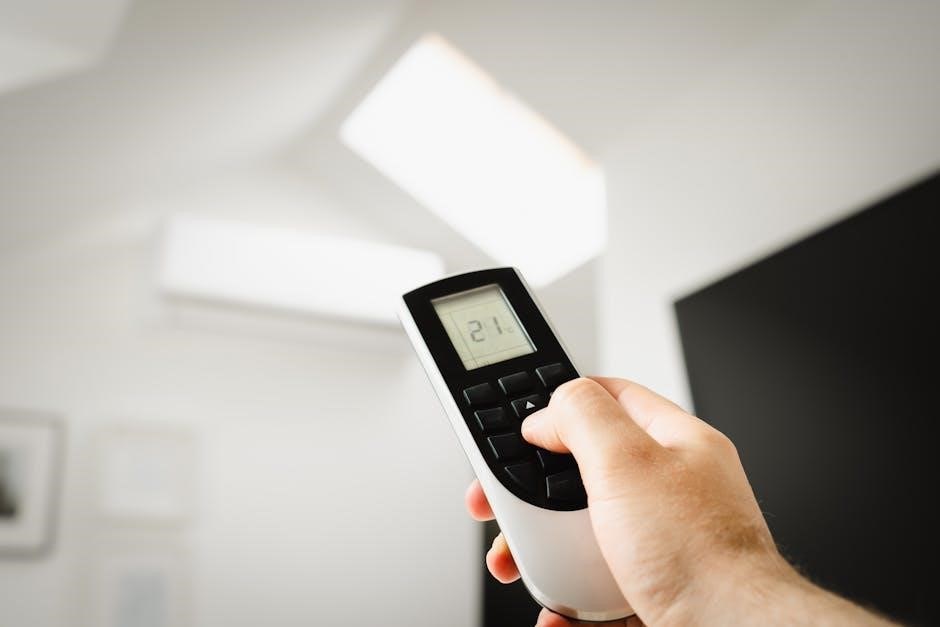
Your Commercial Cool portable AC includes a remote control for convenient operation from across the room. The remote replicates most of the functions available on the unit’s control panel, allowing you to adjust settings without physically interacting with the air conditioner itself. Ensure the remote control has fresh batteries for optimal performance.
Key Functions: The remote typically controls power, cooling mode selection (Cool, Fan, Dry), temperature adjustment, fan speed, and Sleep Mode. Point the remote directly at the air conditioner’s control panel for reliable communication. A clear line of sight is essential.
Troubleshooting: If the remote isn’t responding, check the batteries first. Ensure there are no obstructions blocking the signal. If issues persist, consult the troubleshooting section of this manual or contact customer support.
Warranty Information
Your Commercial Cool portable air conditioner is covered by a limited warranty against defects in materials and workmanship. The standard warranty period is typically one year from the date of original purchase, though extended warranties may be available. This warranty covers parts and labor for repairs necessary to correct manufacturing defects.
What’s Covered: The warranty applies to components that fail during normal use. It does not cover damage resulting from misuse, accidents, improper installation, or unauthorized repairs. Proof of purchase is required to make a warranty claim.
Making a Claim: To initiate a warranty claim, contact Commercial Cool customer support. Be prepared to provide your model number, serial number, and a detailed description of the issue. Retain all documentation related to your claim.
Contacting Customer Support
Need assistance with your Commercial Cool portable AC? Our dedicated customer support team is here to help! We understand that issues can arise, and we’re committed to providing prompt and effective solutions. Several avenues are available to reach us, ensuring convenient access to support.
Phone Support: You can contact our support hotline at [Insert Phone Number Here] during business hours, [Insert Business Hours Here]. Our representatives are knowledgeable and ready to address your concerns.
Online Resources: Visit our website at [Insert Website Address Here] for FAQs, troubleshooting guides, and downloadable manuals. You can also submit a support request through our online form. Expect a response within 24-48 hours.
Email Support: For less urgent inquiries, email us at [Insert Email Address Here]. Please include your model number and a detailed description of your issue.